
The Challenge
Solve the real problems of living in space
Teams research, design, and build a colony on the Moon or Mars that keeps a crew of 12 humans alive and happy — applying real engineering, science, and design to open-ended problems that don't have a single right answer.
Then defend it against real scenarios
A dust storm knocks out power. The water supply is contaminated. Radiation spikes. NASA doubles the crew. Teams think like engineers — tracing the consequences and designing how their colony adapts and survives.
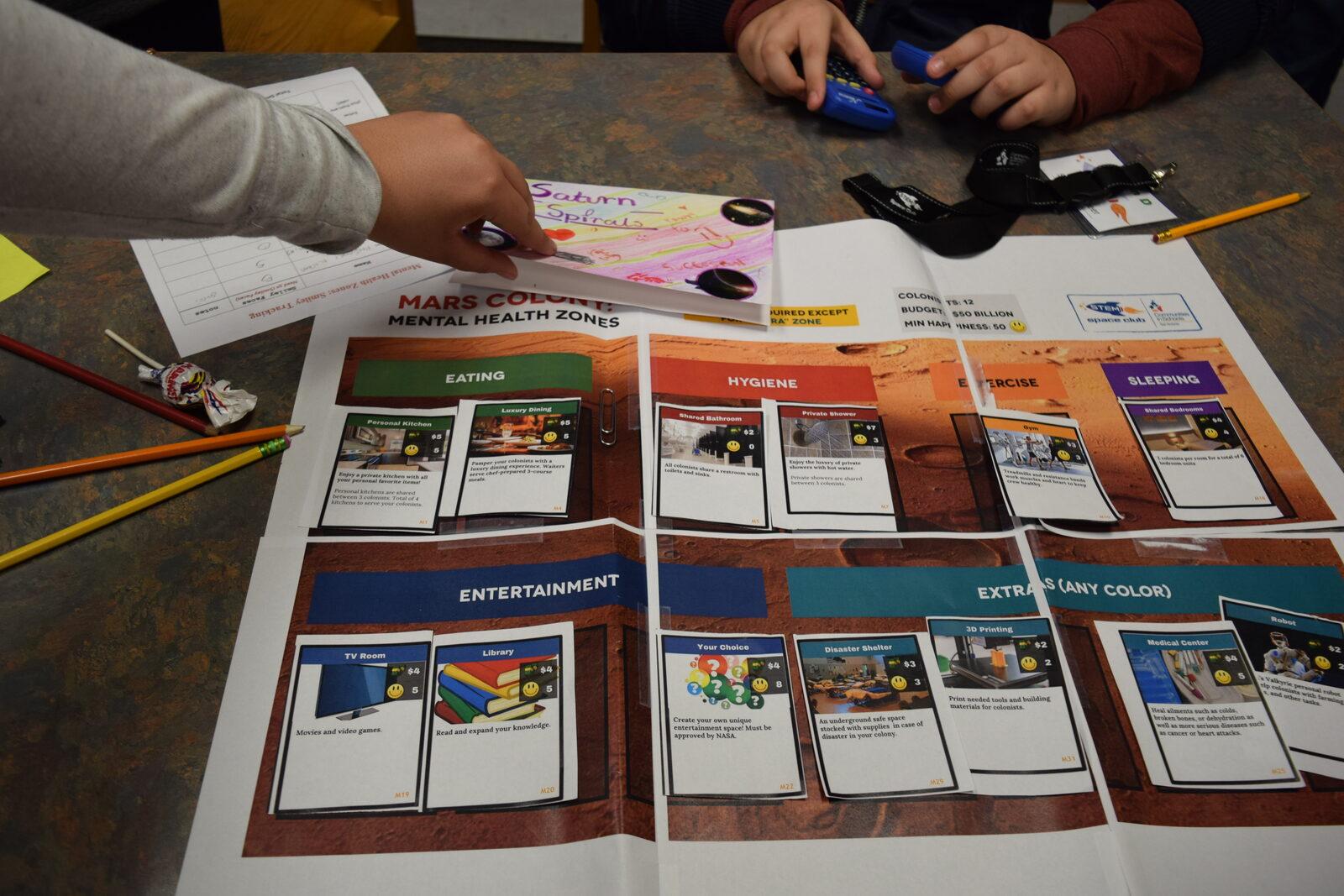
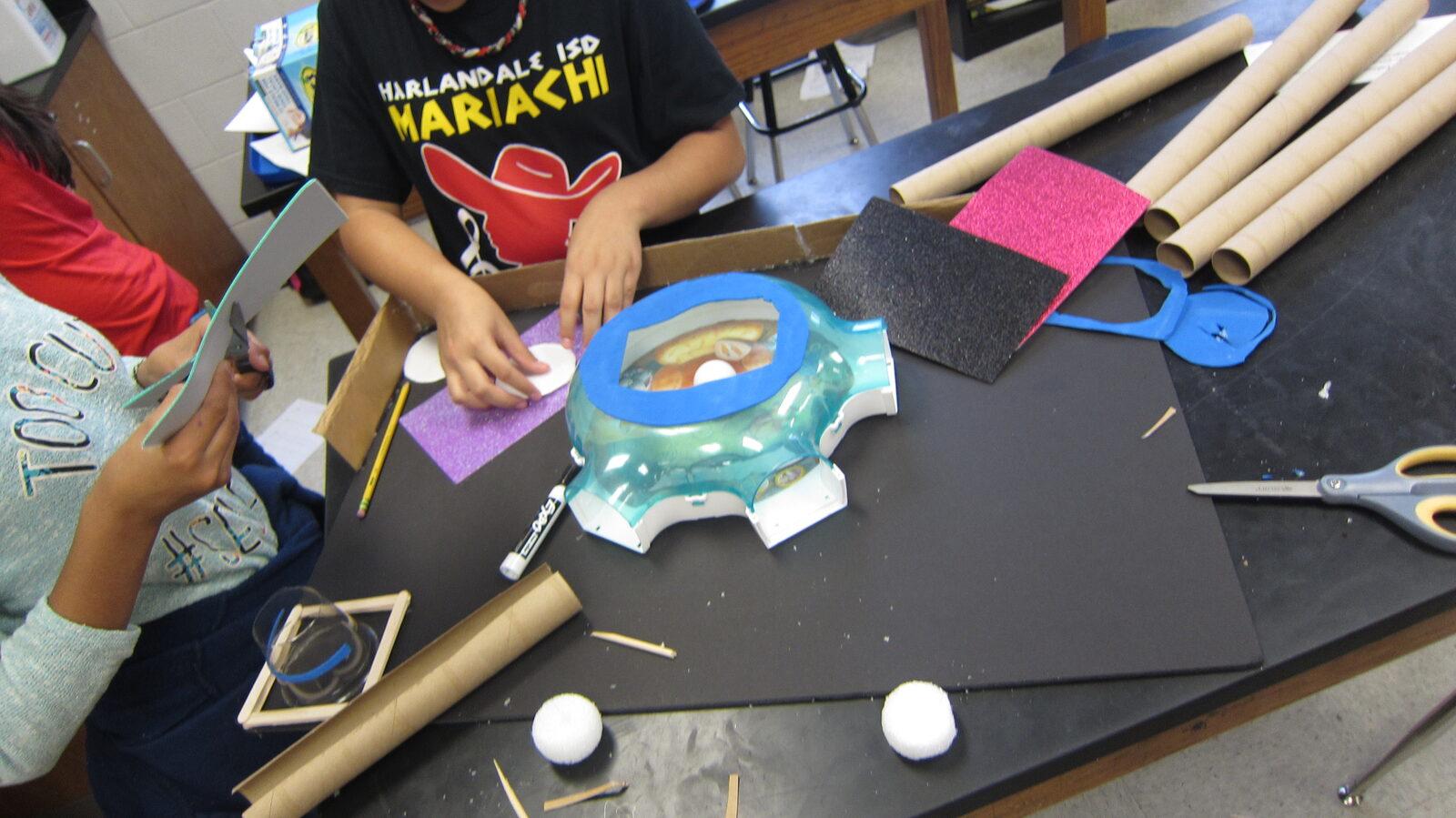
The challenge, zone by zone
Keep a crew of 12 both alive and happy
A colony has to do two things at once. Teams design a solution for every zone below — the engineering that keeps people alive, and the human design that keeps them well.
Engineering zones
Keep the crew alive
Location
Where does the colony sit — a crater, a lava tube?
Power
How is the whole colony powered?
Food
Where does the crew's food come from?
Water
How do colonists get clean water?
Oxygen
How do they breathe?
Communication
How do they stay in touch with Earth?
Science labs
What research keeps the mission going?
Extras
What else does survival demand?
Mental-health zones
Keep the crew happy
Eating
How do they eat well — and together?
Hygiene
How do they stay clean and healthy?
Sleeping
How and where does the crew rest?
Entertainment
How do they beat boredom and isolation?
Extras
What else keeps morale high?
How it works
Seven steps from sign-up to submission
1.Register
Form a team of up to 6 students and register.
2.Identify the problem
Research the challenges of living on the Moon or Mars, and pin down what your colony has to solve.
3.Brainstorm solutions
Work through every zone — power, water, oxygen, sleep, hygiene and more — weighing cost, resources, and risk.
4.Design the layout
Sketch and debate where each zone goes, then lay out the whole colony on paper.
5.Build the colony
Construct a 3D model from recycled materials, with every zone clearly represented.
6.Create the report & video
Write up your design decisions and record a short video walking judges through your colony.
7.Submit
Upload your report and video. Real STEM professionals score every team and send back a personal feedback video.
Everything you need to know
The season, the rules and rubric, and how your project is judged — expand any section.
Season timelineRegistration through the live awards ceremony
Nov 15 – Mar 1 · window
Registration open
Teachers register their teams and set up their crews on the Cosmic Portal.
March 1, 2027
Registration closes
Last day to reserve your teams.
through April 9 · window
Design & build
Teams research the challenges of living in space, design their colony, and build a model from recycled materials.
April 9, 2027
Submissions due
Upload your project report and video.
April 9 – May 1 · window
Judging window
Real STEM professionals review every team, score each part, and record a personal feedback video.
May 7, 2027
Results released
Scores, awards, and feedback videos are delivered to every team.
May 7, 2027
Virtual awards ceremony
Streamed live on YouTube with guest speakers, special awards, and raffle prizes.
After the ceremony
Prizes ship
Winners and prize recipients receive their prizes by mail.
Rules & rubricWho can enter, what to submit, how projects are scored, and the media release
Who can enter
The Space Colony Competition is an informal STEM competition for teams of up to 6 students in Grades 3–8. Teams enter through their school; a teacher or club leader registers and represents the team.
- Elementary DivisionGrades 3–5
- Middle DivisionGrades 6–8
What each team submits
Every team uploads its work to a private team folder. Required items are marked with a red asterisk.
Project Report*
Your team's written report, including the team name and team number.
PDF, doc, or image · up to 25 MB
Colony Layout Drawing*
A detailed drawing or graphic showing all zones and the overall layout of the colony.
Image or PDF · up to 25 MB
Team Video*
A short, student-produced video presenting the colony and the 3D model.
Video · up to 2 GB
Mission Patch(optional)
An optional team mission-patch image.
Image · up to 25 MB
Recording on a phone? That's expected. Film in 1080p rather than 4K and keep the video a few minutes long — it stays well under the 2 GB limit and uploads far faster on classroom Wi-Fi.
How projects are scored
Each project is reviewed by volunteer STEM professionals on a 100-point rubric across three parts. Every team receives written feedback and a short feedback video from its judges.
Part 1 — Engineering & Mental Health Zones
50 ptsTen criteria (0–5 each): how well the design solves for power, food, water, oxygen, communication, and the crew's mental health and well-being.
Part 2 — Location, Layout & Model
40 ptsSite choice, zone layout, and the physical 3D model built from recycled materials.
Part 3 — Team Spirit
10 ptsCreativity, teamwork, and the energy the team brings to their presentation.
Top teams earn a Cosmic, Galactic, or Solar award based on how they place in their division, plus special awards for standout work.
Photos & video (media release)
Student projects may include images, video, and audio. Judges see them only to evaluate entries. With family permission, the Cosmic Leap Foundation may also feature student work publicly (website, newsletters, social media). Choosing not to allow public use does not affect a team's participation or scoring.
Download the media release (PDF)How your project is judgedReal feedback from volunteer STEM mentors
Every team's work is reviewed by volunteer judges — engineers, educators, and researchers who care about young builders. Here's what that looks like for your team.
A personal feedback video
Judges record a short video for the teams they review — coaching, not just a score.
Privacy is in your hands
Judges only use student work to evaluate it. Whether a team's photos or video are ever shown publicly is the family's choice — set in the media release, and opting out never affects judging or scoring.
Growth over ranking
Calibrated scoring focuses on helping every team improve, not gaming a leaderboard.
Everyone gets seen
Restricted or not, every team is judged, scored, and receives its feedback.
Ready to enter?
Reserve your teams now and get invoiced later — nothing is due up front.
Questions? team@cosmic-leap.org